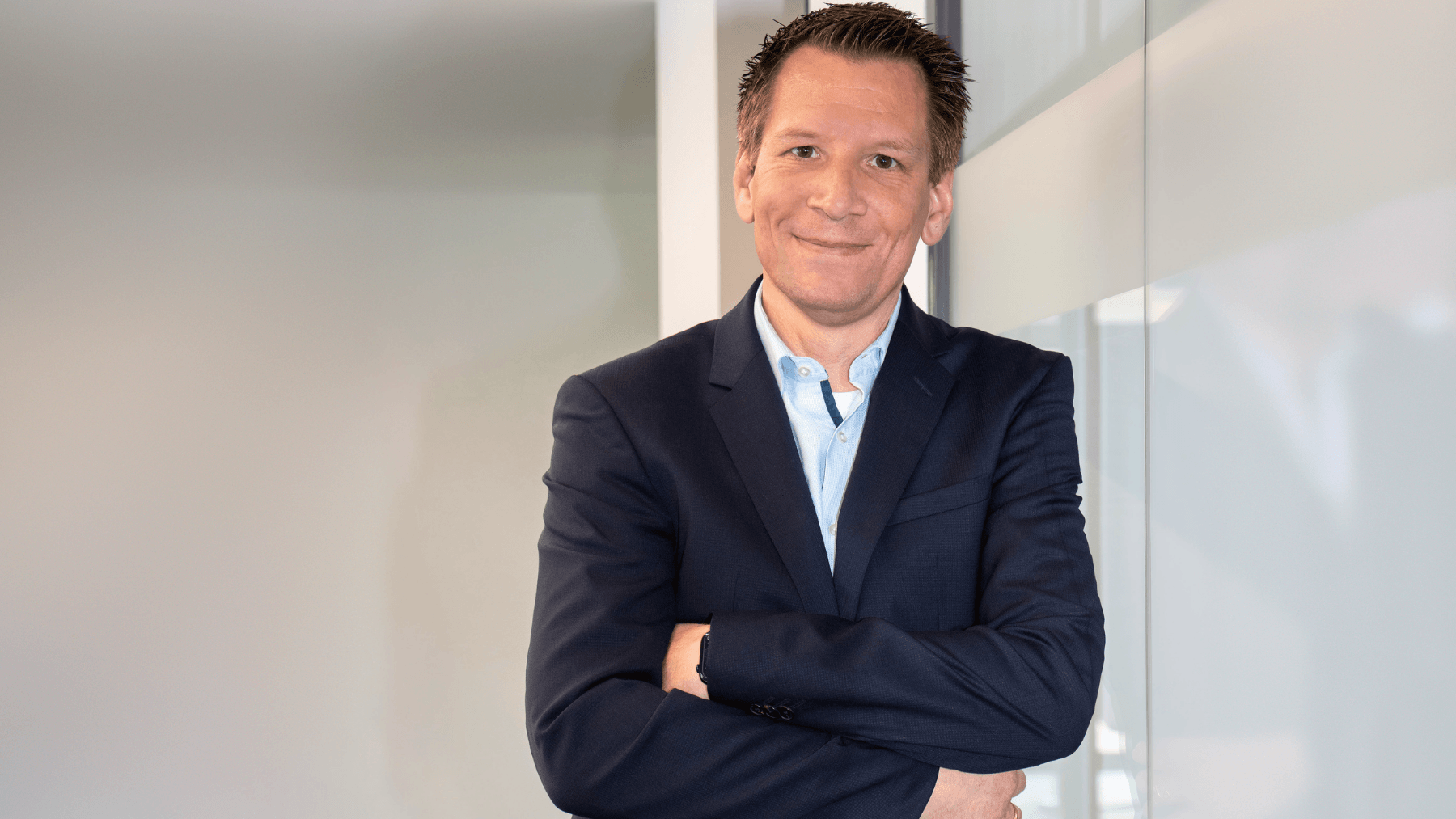
Klasmann-Deilmann: 50% reduction in peat use by 2030
Managing Director Damian Ikemann answers TASPO’s questions
Damian Ikemann, CEO of the Klasmann-Deilmann Group, answered the following questions in an interview with TASPO. Excerpts from his answers were published in the TASPO supplement “Soils and Substrates”, which appeared on 19 June 2026. The full answers can be read below.
- 1. What is your current business sentiment in view of the noticeable reluctance to spend among end consumers and the many negative signals, such as those from the Ifo and GfK indices?
Damian Ikemann: Since the start of the coronavirus pandemic, one crisis after another with global implications has unfolded. As a result, business sentiment is subject to constant fluctuations. However, the fact remains that our business model is proving largely resilient to geopolitical influences. Internal mechanisms are now also in place to deal constructively with the situation at hand and to carry on with full commitment. We remain confident.
- 2. How do you assess the risk that the ‘Round Table’ in Germany might falter for similar or other reasons, as the Dutch Peat Covenant did – and how can this be prevented?
Damian Ikemann: We do not wish to speculate on the failure of the Round Table before it has really got off the ground. It is good that the Round Table has finally been established. As long as the parties involved do not insist on maximum demands but remain willing to compromise and realistic, an appropriate and sustainable solution can be reached.
- 3. How do you respond to the accusation by NGOs that domestic restrictions merely lead to an ecological shift of problems to the Baltic states, in which German companies are heavily involved?
Damian Ikemann: The Baltic states have been among the key suppliers of raw materials for horticulture for decades. In that respect, nothing is currently being shifted there. However, Baltic raw materials are becoming increasingly important as other sources dry up. Anyone who speaks of a shift in the problem in this context fails to recognise the considerable and successful efforts of the substrate industry to use sustainable (materials) on a large scale. Klasmann-Deilmann alone used 1.15 million m³ of alternative raw materials in growing media last year.
- 4. What is the current proportion of Baltic peat in your professional range, and how do you offset the long transport distances and peat extraction there in your carbon footprint?
Damian Ikemann: Peat harvesting and transport generate emissions, and the increasing use of alternative raw materials and their transport also generate emissions. Unfortunately, the substrate industry is not climate-neutral. Even a complete ban on peat would not modify that. However, it is true that peat and transport offer the greatest potential for savings. By reducing peat use, the industry is therefore on the right track to cutting emissions. Klasmann-Deilmann is already going one step further here: we can mix a precisely calculated proportion of our biochar, TerraCoal, into growing media, thereby offsetting all emissions from raw materials, production and transport. This process has a strict relation to the purchase of official CO2 certificates. This means: in fact, we already have the option of full offsetting, but the higher price for this cannot usually be realised in the market yet.
- 5. To what extent are the global economic and political situation, as well as high energy prices, affecting the supply chains for substitutes such as wood fibres or coco fibre, and does this jeopardise the peat reduction targets?
Damian Ikemann: There are painful price rises from which the entire horticultural sector is suffering. However, the raw material supply chains remain largely intact. This demonstrates once again that the substrate industry should secure its resources in as diverse a manner as possible, in terms of both type and location, in order to remain capable of acting at all times. Klasmann-Deilmann has therefore made intensive efforts in recent years to secure the supply of all necessary substrate raw materials through long-term supplier contracts and the development of new in-house production capacities. This has had a very positive effect, particularly last winter and spring, as despite the proclaimed peat shortage, we remained a reliable supplier to all our customers at all times. Our goal is now to increase the proportion of alternative raw materials to 50% by 2030, and this goal is not at risk.
- 6. What specific investments are you making in regional alternatives (such as paludiculture and sphagnum moss cultivation) to decrease dependence on imports and fossil fuels for transport?
Damian Ikemann: We are investing in the innovative, protected cultivation of Sphaxx peat moss, thereby offering an environmentally friendly alternative to mosses from natural peatlands. Furthermore, our new biochar TerraCoal, as well as the well-established GreenFibre wood fibres and TerrAktiv green compost, are all local peat alternatives from the German-Dutch region.
- 7. How far have you got in preparing for the implementation of the PPWR requirements, particularly regarding the use of post-consumer recycled materials in your substrate packaging, the 100% recyclability of films and pallet wrappings, and the avoidance of void space?
Damian Ikemann: We are well prepared for the first stage of the PPWR guidelines – as far as the legal ambiguities that still exist allow. The conformity assessment is underway; our substrate packaging already contains a high proportion of PCR, and there is no empty space in our packaging. The issue of recyclability itself has not yet been conclusively defined, and there are as yet no promising approaches for 100% recycling. However, we are working hard with our suppliers to find solutions.
- 8. What experience have you had so far with the new biodegradable slow-release fertiliser wrappers, and how do you address the issue of reduced stability and the associated shorter shelf life of the growing media?
Damian Ikemann: Even in the past, substrates containing controlled release fertilizers (CRFs) were intended to be used as soon as possible, as nutrient release begins rapidly after mixing and storage can lead to an undesirable increase in salinity. In this respect, shelf life is not a new key criterion for the new CRF types with biodegradable coatings. The specific changes that will accumulate to release and stability rates, as well as to the product portfolio, are currently being examined in detail. Our Research & Development team is in close contact with all manufacturers of CRFs, and projects involving new types are in the pipeline.