Lower emissions in the substrate
50% renewable raw materials by 2030 | 2025 Sustainability Report published
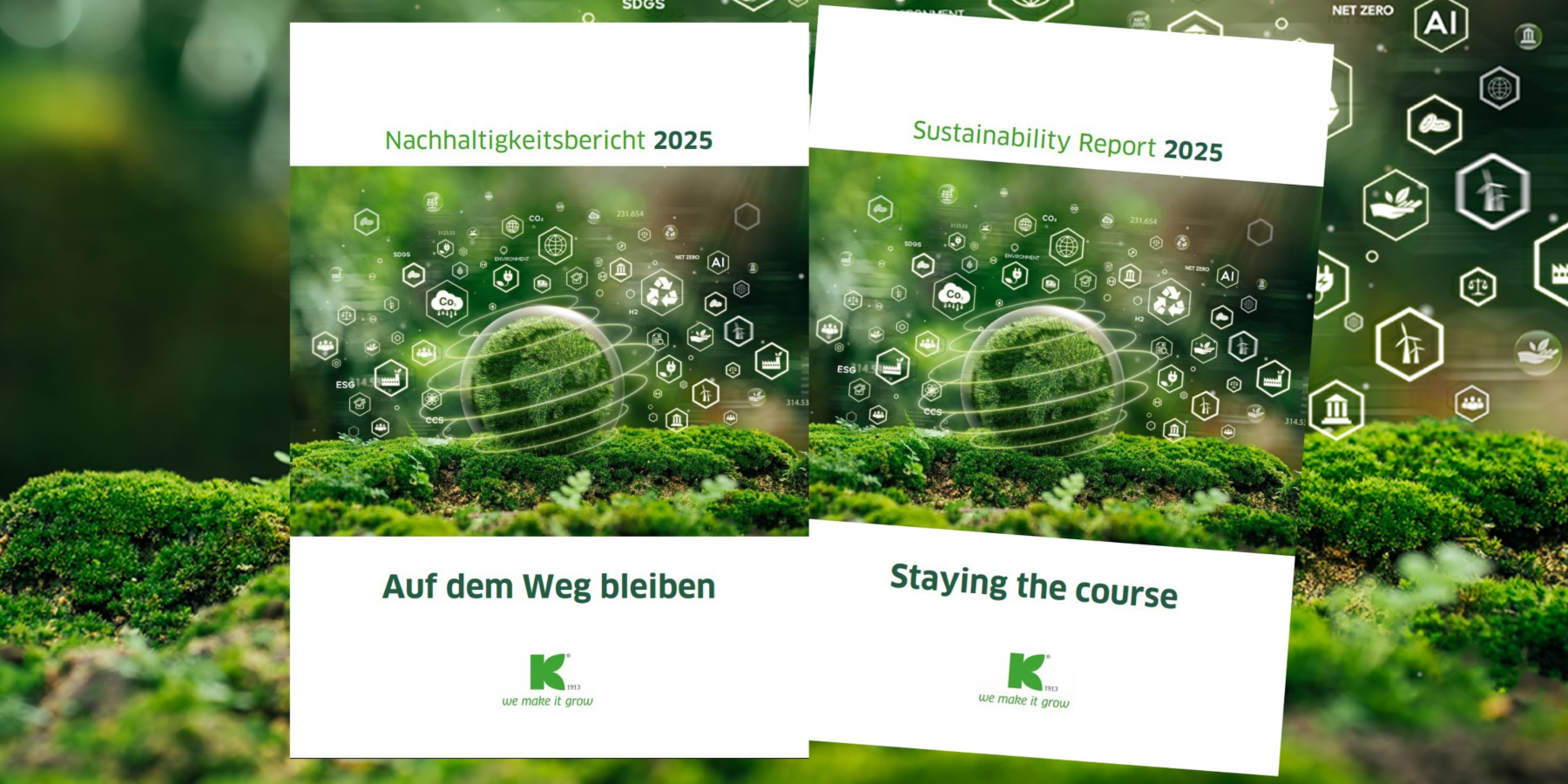
Klasmann-Deilmann has published its 2025 Sustainability Report. This marks the tenth time the company has provided an update on its economic, environmental and social performance. Further progress has been made in the use of alternative raw materials and in reducing emissions.
The proportion of renewable raw materials in the total production of growing media for professional horticulture rose to 30%. Over the past year Klasmann-Deilmann used a total of 1.15 million m³ of wood fibres, green compost and cocos, as well as innovative raw materials such as sphagnum and biochar.
“We are on the right track,” said Managing Director Damian Ikemann, “and already have our sights firmly set on the next target. By 2030, we aim to increase the proportion of alternative raw materials to 50% of our total production. We are thus pursuing an ambitious growth programme, but not a plan to phase out peat. Furthermore, we will continue to expand the areas dedicated to the protected cultivation of sphagnum so that we can utilise this forward-looking raw material – which offers the same beneficial properties as peat – in an ever-increasing number of applications.”
Between 2013 and 2025, Klasmann-Deilmann reduced its product carbon footprint (cradle to grave) by 33%, from 90.7 kg CO2e/m³ to 60.9 kg CO2e/m³. This reduction is largely due to the increasing use of alternative raw materials. In contrast, the corporate carbon footprint (cradle to customer) has been rising slightly again since 2024, after having consistently declined between 2013 and 2023. This is due to economic growth, which leads to higher resource consumption and more transports. Nevertheless, the corporate carbon footprint fell by 12% between 2013 and 2025, whilst sales volumes rose by 30% over the same period.
“Klasmann-Deilmann is thus succeeding in an area where political and societal expectations are particularly high”, explains Managing Director Jan Astrup. “There is a call for a far-reaching shift away from peat towards renewable raw materials. The aim is to significantly reduce emissions from extraction sites and substrates. However, climate neutrality will not be achieved in this way, neither at product level nor at company level. The use of alternative raw materials instead of peat does not result in a net-zero substrate.”
Sustainable development requires a massive financial outlay from Klasmann-Deilmann, the careful integration of new business units, the refurbishment of production facilities, an ongoing review of the product portfolio and a high level of personal commitment from the teams. “Despite the need to move at a rapid pace, we will take every step on the path of transformation with due care,” said Damian Ikemann, “in order to safeguard both the financial viability and the long-term success of our company.”
You can find the sustainability report here: https://klasmann-deilmann.com/en/media-centre/brochures/