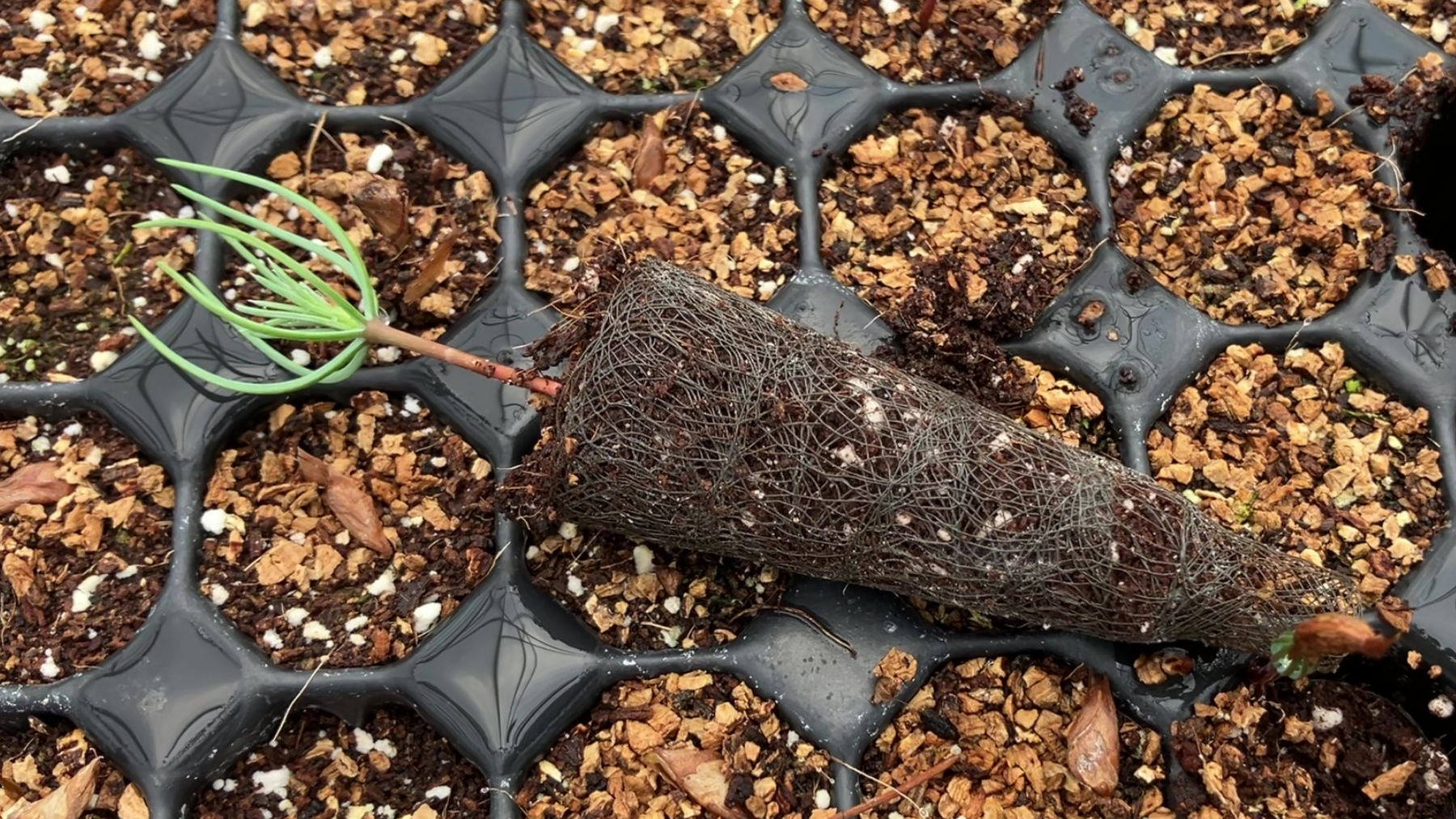
Growcoon in forest tree production
Greater automation, more stable root balls and a significant competitive edge
The demands placed on modern forest tree nurseries are constantly increasing. Shorter cultivation times, greater automation and, at the same time, consistently high plant quality are crucial factors for commercial success. The example of the Spitzmann tree nursery illustrates how innovative propagation systems can support this. Florian Zorn, owner of the Spitzmann tree nursery, has now been successfully using Growcoon in the production of forest plants and reports significant benefits throughout the entire production chain.
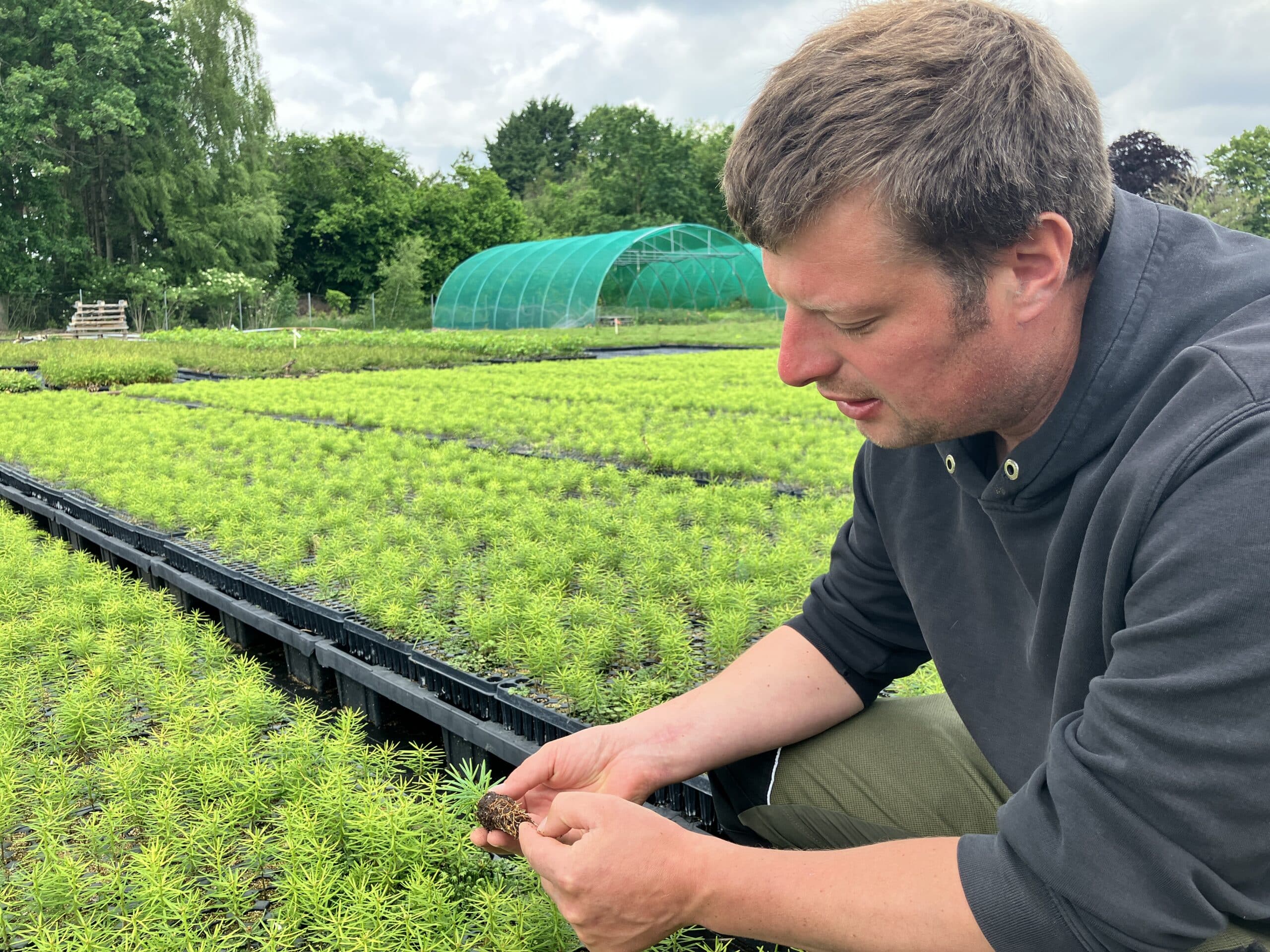 The Spitzmann tree nursery produces around five to six million seedlings annually. In addition to young plants for further cultivation, the nursery also produces ready-to-sell containerised forest plants for professional customers. As a purely wholesale operation, the focus is on efficiency, consistent quality and reliable production planning. With increasing automation, new demands arose regarding the quality of the root balls. Compact and stable root balls were particularly necessary for automated transplanting processes.
“Our customers needed compact root balls for automated transplanting – both for field production and for container production,” explains Florian Zorn. “The problem was that the root balls were often too loose and did not have sufficient root penetration.”
More stable root balls for earlier sale
In its search for a suitable solution, the nursery tested various systems and finally opted for Growcoon.
The biodegradable Growcoon stabilises the propagation substrate and promotes the formation of a compact root ball. For the Spitzmann tree nursery, one advantage stood out in particular: “Growcoon enables us to fill the trays to 100 per cent very quickly, sell the plants much earlier and give both our customers and ourselves a clear competitive edge,” reports Zorn.
Positive results in root development
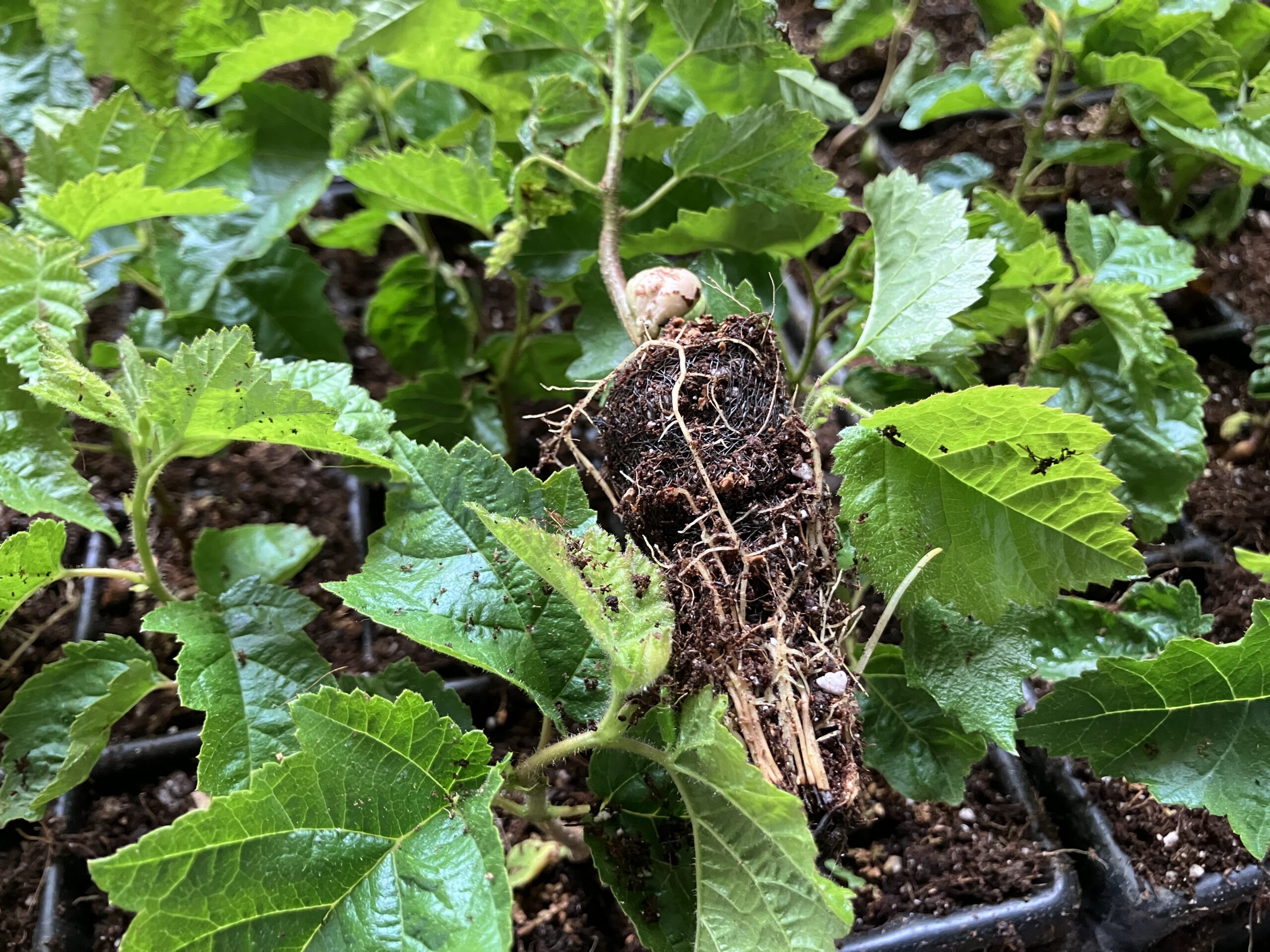
Before practical use, there were initial concerns regarding root development. In forest tree production in particular, ring-shaped root formation would pose a significant quality risk. However, the trial results were unequivocal.
“We were concerned that the roots might twist due to the structure of the Growcoon. That would have been a deal-breaker for our product,” says Florian Zorn. “So far, however, we have not observed this.”
Instead, the company observed targeted root growth along the tray structure. “The roots grow straight down between the Growcoon and the tray, guided by the grooves. On the contrary: the Growcoon actually helps the roots to grow even straighter and more robust.”
This development can also have a positive long-term effect on plant quality and reduce potential grounds for complaints.
Key technology for automation
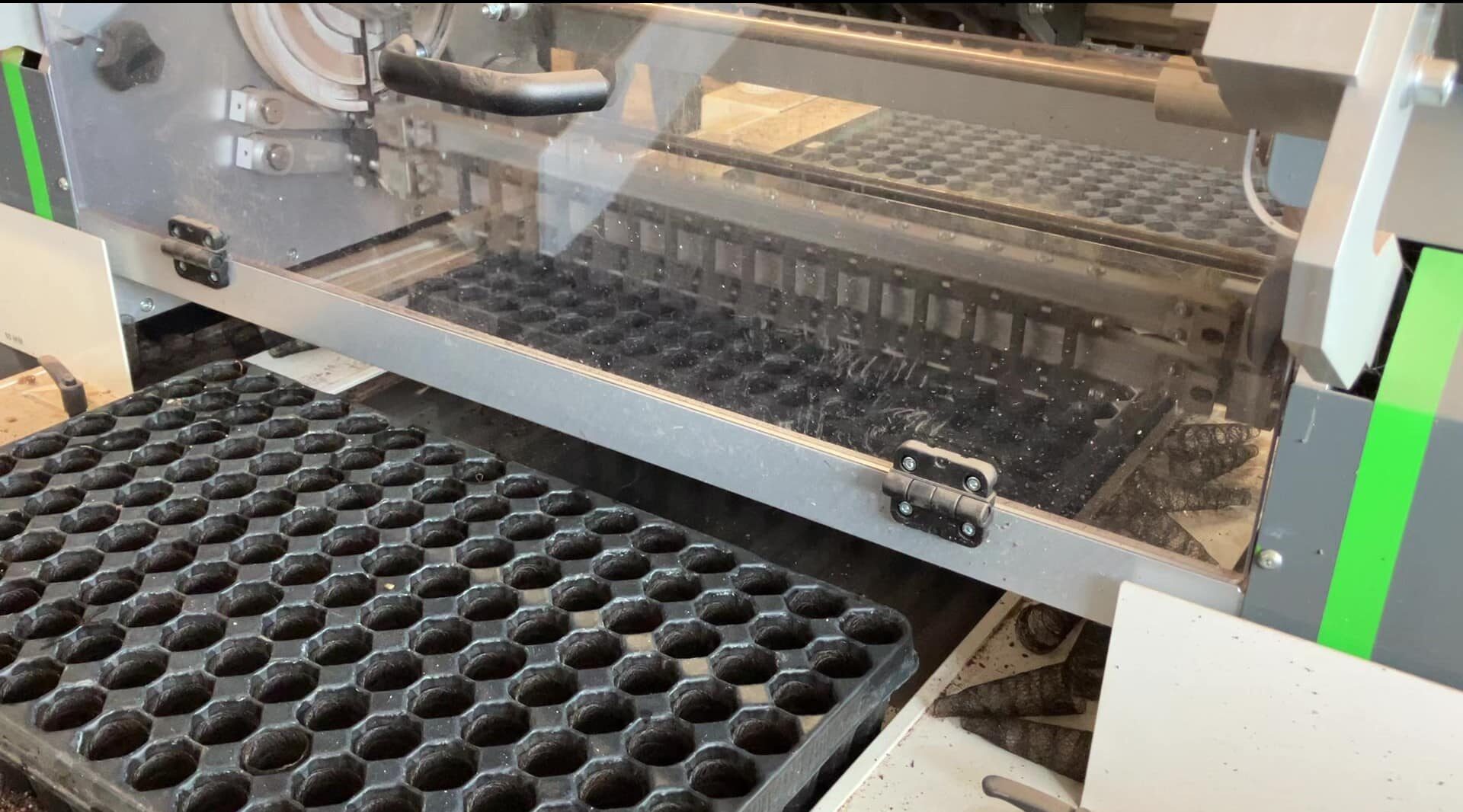 In addition to improved root quality, Florian Zorn sees considerable advantages, particularly in the automation division. Although the introduction of the system initially required additional investment in appropriate stacking and handling technology, the switch is paying off in day-to-day operations. Automatic sorting and transplanting processes can be carried out much more reliably with stable root balls. This opens up new possibilities, particularly for batches with irregular germination.
“If we have batches with poorer germination rates, we can now group them together automatically. Previously, this would have taken us ten to twelve weeks. With Growcoon, we can complete this in around three weeks.”
Ensuring quality and reducing labour
For the Spitzmann tree nursery, Growcoon is now a key component of its production strategy. “Growcoon is very important for automation,” summarises Florian Zorn. “The aim is to produce a high-quality product whilst using as few labour resources as possible.”
This example shows that modern propagation systems can not only improve root quality but also unlock new potential for automated production processes. Particularly in labour-intensive crops such as forest tree production, this can make a decisive contribution to the long-term viability of horticultural businesses.