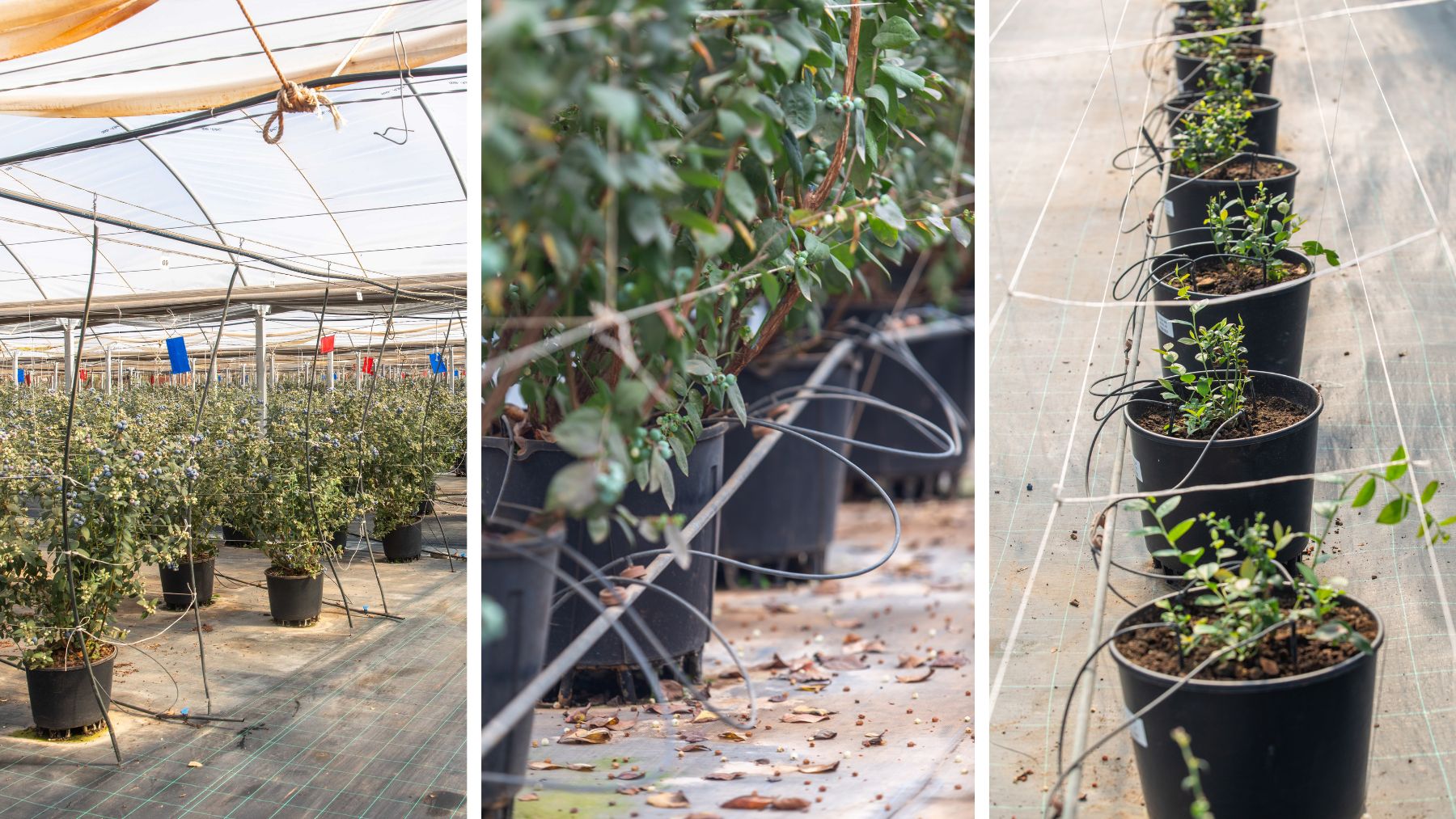
When water changes, growing must change too
How growers in Morocco are adapting to a new water reality
For decades, water was often taken for granted. Growers focused on crop selection, yields, plant health, and market demands. Today, however, water itself has become one of the most critical factors in horticultural production.
In regions such as Souss-Massa in Morocco, where the production of soft fruits and vegetables plays a key role in the local economy, water scarcity and declining water quality have fundamentally changed the way growers think about production.
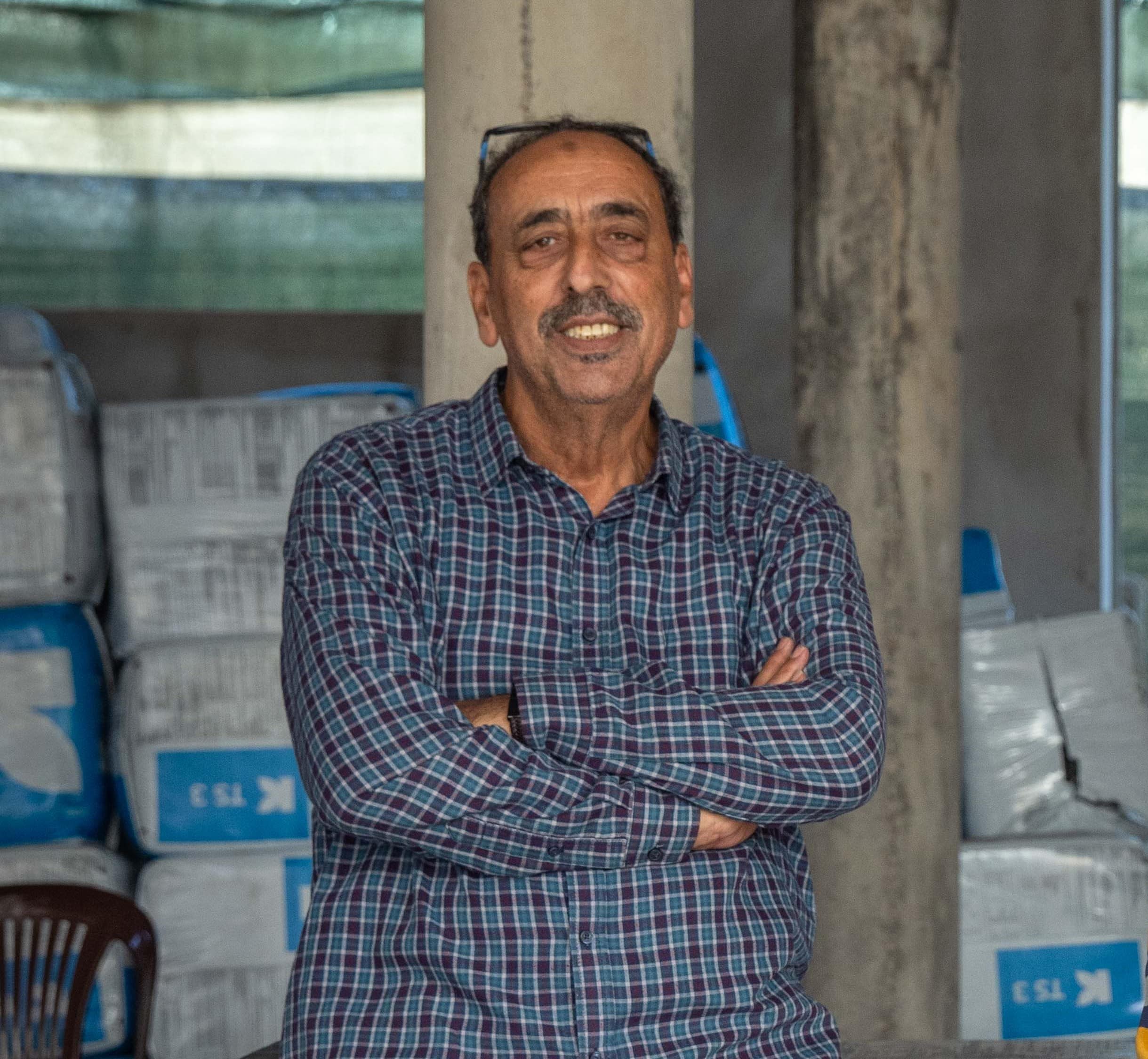
As Lhassan Housni, Technical Manager at CASEM South of Morocco, explains: „It’s a question of cost, and of the global availability of water for existing farms, future expansions and people.“
His statement highlights a challenge that extends far beyond horticulture. Water is no longer just a production input. It has become a shared resource that must serve growers, expanding populations, and future economic development alike. For decades, Casem and Klasmann-Deilmann have worked closely together to adapt substrate solutions to the changing needs of Moroccan growers. Today, that collaboration is increasingly focused on helping growers respond to water scarcity, rising water costs and changing irrigation requirements.
Desalination: A Solution That Creates New Challenges
In order to ensure a reliable water supply, many growers in the Agadir region have invested in desalination systems. In parallel, a large public desalination of sea water plant has been set up to support agricultural production and the domestic water supply.
This local development is part of a broader national strategy. Morocco has invested heavily in desalination infrastructure in recent years and plans to source a significant proportion of its drinking water from the ocean in the future. According to CNN, policymakers increasingly view drought as a long-term structural change that requires new approaches to water management, rather than a temporary phenomenon. [1]
At first glance, desalination appears to solve the problem. Yet the reality is more complex. While desalination improves water availability, it also significantly increases production costs. Furthermore, desalination requires a complete change in cultivation strategy.
Every Drop Counts
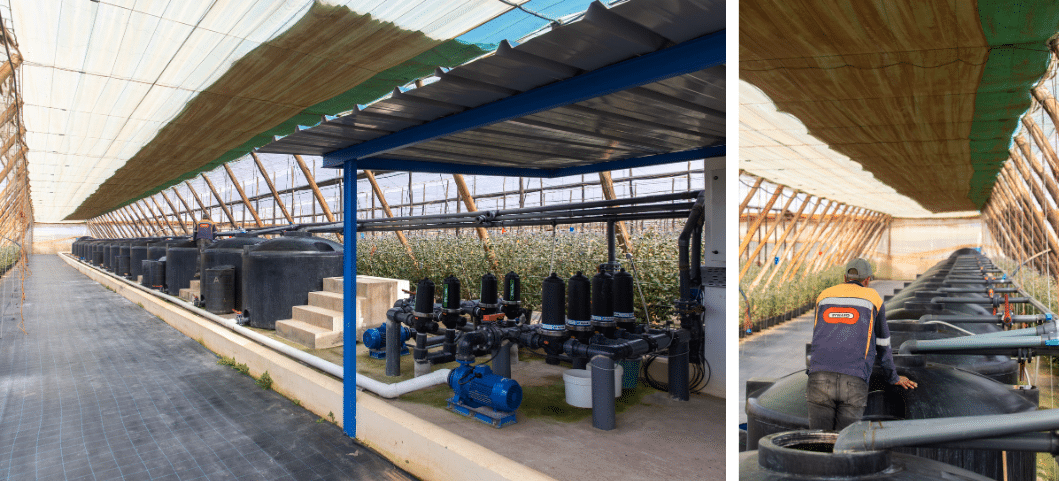 As water becomes more expensive, growers are focusing more and more on efficiency. Traditional irrigation strategies often relied on relatively high irrigation volumes and drainage rates to maintain stable root-zone conditions. In the current climate, this approach is difficult to justify economically.
According to Housni, the goal today is clear: “Our idea is to create substrates that can hold more water, and to encourage customers to adapt the way they water and fertigate. The aim is to make water use more efficient and keep costs as low as possible.“
In practice, this can mean applying larger irrigation volumes at longer intervals while reducing drainage losses – a significant shift from traditional irrigation strategies.
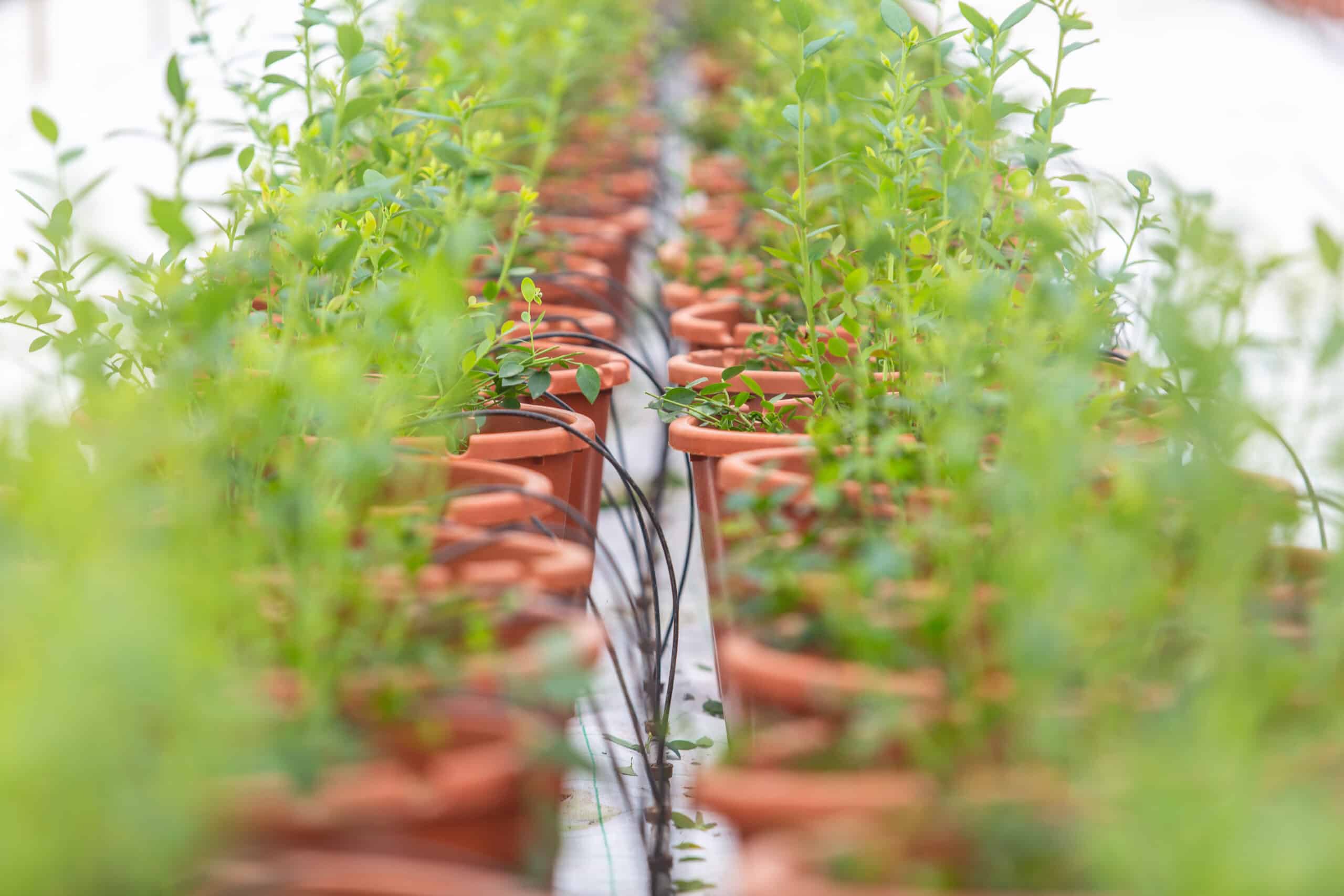
However, implementing such strategies is not straightforward. Desalinated water introduces new management considerations, including residual elements such as boron (related to choice of the reverse osmosis membrane) and the need for adapted fertigation programs.
„The problem is multi-layered, so the solution is not just a matter of introducing a new product, but also of having the know-how to use it properly,“ says Anja Fritzen, Technical Advisor at Klasmann-Deilmann.
Irrigation strategies, fertigation programs and drainage collection systems may need to be adapted. The interaction between water quality, cultivation practices and substrate performance is becoming increasingly important.
Klasmann-Deilmann’s technical teams are working closely with growers and partners such as CASEM to evaluate how substrate composition, water retention and irrigation strategies can be adapted to these new conditions.
„We are still in the development phase“, explains Jean Roudier, Project Manager at Klasmann-Deilmann France. „Trials are running in the country; we still have to fine-tune the theory and adapt it to day-to-day practice.“
While Morocco provides a particularly visible example, the challenge is far from unique. Water scarcity, rising water costs and changing water quality are becoming realities in many horticultural regions around the world.[2]
The experience in Morocco shows that adapting to water scarcity is not simply a matter of installing a desalination plant or introducing a new substrate. It requires technical expertise, local knowledge and close collaboration between growers and industry partners.
As water becomes an increasingly valuable resource, those partnerships may prove just as important as the water itself.
References
[1] CNN. Morocco’s desalination strategy: A blueprint for Africa? 2026. Reported by CNN and referenced in coverage of Morocco’s national desalination strategy.
Morocco’s desalination strategy: A blueprint for Africa? | CNN
[2] FAO (Food and Agriculture Organization of the United Nations). The State of the World’s Land and Water Resources for Food and Agriculture – Systems at Breaking Point (SOLAW 2021). Rome: FAO, 2021. Available at: https://openknowledge.fao.org/server/api/core/bitstreams/ecb51a59-ac4d-407a-80de-c7d6c3e15fcc/content