From wood waste to Containermulch
Containermulch by Klasmann-Deilmann celebrates its 15th anniversary
What began as a response to a specific enquiry from the tree nursery sector has since developed into an indispensable product. This year, Klasmann-Deilmann’s Containermulch celebrates its 15th anniversary. Years ago at the IPM trade fair, the need for an effective solution to combat moss and weeds in pots was recognised. Existing solutions either delivered inadequate results or had undesirable side effects. Klasmann-Deilmann therefore set out to find an alternative. The first successful trials took place in 2010, following which Containermulch was launched in 2011.
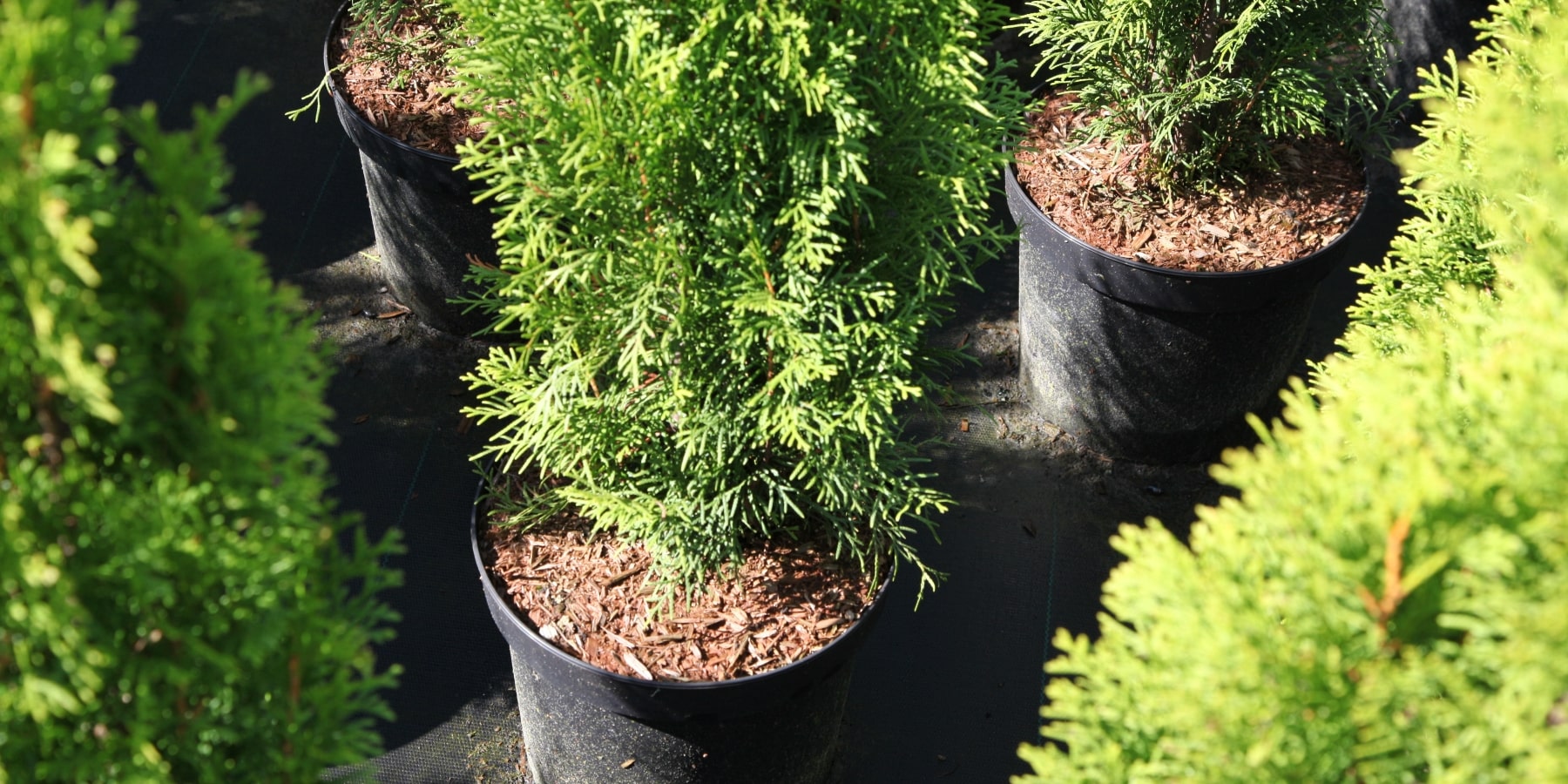
The solution was remarkably simple: wood. Containermulch consists of bark-free wood. It is produced using wood residues from sawmills, which is coloured with natural, mineral pigments. Thanks to a thermal treatment, potential risks to plant health are very low. “The structure is key,” explains product specialist Joy Godrie. “The different particles interlock with one another. This creates a stable layer once moistened, which stays firmly in place. This remains true even during transport or if a pot tips over.”
Waste wood as a raw material
Production takes place at the headquarters in Geeste (Germany). There, valuable waste materials from wood processing are repurposed for horticultural use. Collaboration with raw material suppliers is of great importance here, as the type of wood, its structure and availability are crucial to the quality of the Containermulch. The wood comes from sustainably managed forests. The production process is also RHP-certified.
“In practice, it is repeatedly demonstrated that the combined properties meet the exact needs of tree nurseries,” explains Godrie. “Containermulch inhibits the growth of weeds, moss and algae, is water-permeable and helps to limit evaporation from the substrate. Trials by Klasmann-Deilmann show that moisture loss in covered 3-litre pots over a period of thirteen days was 1.8 times lower than in uncovered pots.”
In addition to its effect against moss and weeds, the use of Containermulch helps to increase the proportion of renewable raw materials in the pot. “As the upper part of the pot is filled with Containermulch, less growing medium – and in particular less peat – is used.” Another important advantage is that the Containermulch can be applied by machine, shortening work processes and thus integrating seamlessly into the nursery’s automated processes.
Adapting to demand
Various versions have been developed in response to market requirements. There are now different textures available for specific applications. This means that container mulch can be used in a variety of ways, particularly, of course, in tree nurseries, but also for other crops that remain in pots for longer periods. Also economic pressures often become the decisive factor in choosing container mulch to reduce labour costs, water consumption and the use of plant protection products in nurseries.
Klasmann-Deilmann’s experience in processing woody products in growing media forms an important foundation for this. Godrie explains: “Over the past twenty years, we have built up extensive knowledge of the properties, processing and application of renewable raw materials. This knowledge helps tree nurseries to master the challenges of today and tomorrow. It is precisely the combination of our product knowledge and our practical perspective that makes Container Mulch a solution which works not only in the pot, but throughout the entire supply chain, creating added value.”
Author: Anita Bassie