Forestry nurseries in transition
Why the growing medium determines cultivation success
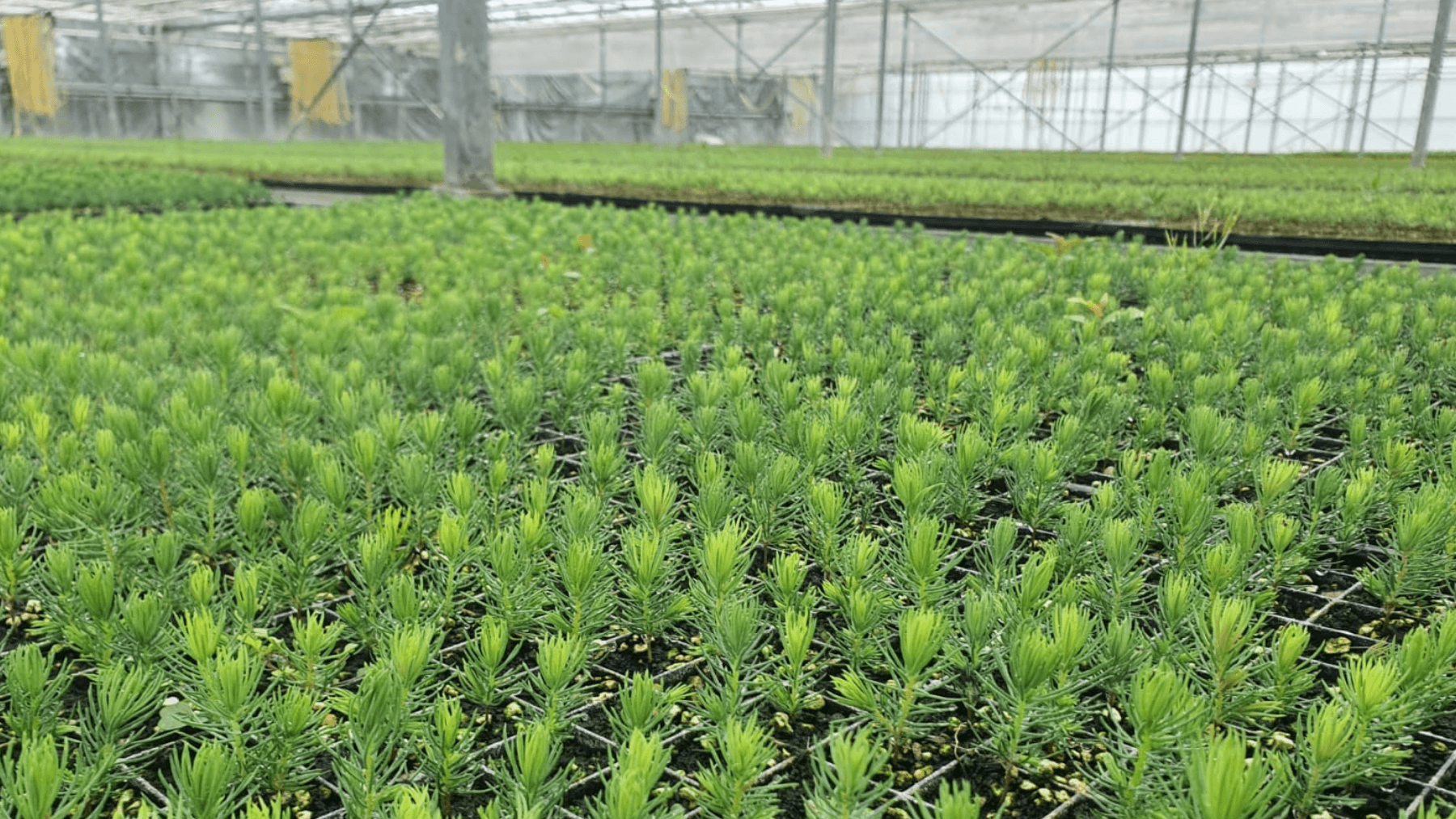
The production of forestry young plants has undergone fundamental changes in recent years. Container cultivation in trays, paper pots or Growcoon now allows for precise control of cultivation practices and high space efficiency in the nursery. At the same time, the demands placed on the growing media are increasing significantly. It is no longer merely a growing medium, but a highly functional system that plays a decisive role in root development, plant quality and establishment success.
Physical stability as the foundation of crop security
The challenge begins with the physical properties. A suitable growing medium must remain structurally stable throughout the entire cultivation period whilst offering a balanced ratio of water-holding capacity and air capacity. These parameters are particularly crucial in forest tree production, where young plants are often cultivated in small cell volumes. Excessive water-holding capacity quickly leads to oxygen deficiency in the root zone, whilst insufficient water storage promotes drought stress. The ability to re-wet is equally critical, as dried-out growing media can become hydrophobic and then find it difficult to absorb water again.
Precise nutrient control for different tree species
In addition to the substrate’s physics, chemical controllability plays a central role. Different tree species have distinct requirements regarding the pH value and nutrient availability. Conifers prefer rather acidic conditions, whilst deciduous trees tolerate a broader spectrum. At the same time, the nutrient supply must be precisely tailored to the respective stage of development. During the propagation phase, low salt levels are required, whilst as cultivation progresses, a tailored supply of nitrogen, phosphorus and potassium, as well as trace elements, must be ensured.
Renewable raw materials alter substrate dynamics
With the increasing integration of alternative substrate constituents, complexity continues to rise. Wood fibres, bark or green compost alter the physical and chemical properties of the growing medium. For example, they improve drainage and promote aeration, but at the same time can lead to greater nutrient dynamics and increased leaching effects. In many cases, nitrogen requirements also increase, requiring an adapted fertilisation strategy. At the same time, these components offer benefits for biological activity within the growing medium, for instance by promoting mycorrhiza, which plays a key role in the establishment of forest plants in the field.
This is precisely where Klasmann-Deilmann comes in with its growing media solutions. The targeted combination of raw materials such as GreenFibre® wood fibres, TerrAktiv® composted bark and other components results in structurally stable mixtures with defined air and water capacities. These enable reliable crop control even under changing weather conditions. At the same time, carefully balanced recipes ensure homogeneous nutrient availability and support the development of a strong, well-branched root system.
Forest tree nurseries report that such growing media really come into their own, particularly during periods of heavy rainfall. Improved drainage reduces the risk of waterlogging and root damage, whilst the uniform structure promotes consistent crop development. At the same time, the plants benefit from better adaptability after planting, which directly translates into higher survival rates.
In an environment where crop security, efficiency and sustainability are equally important, growing media thus takes centre stage in the production strategy. For modern forest nurseries, it is not merely a production factor, but a crucial lever for ensuring predictable quality and minimising risks.