Germany needs this factory
Klasmann-Deilmann opens new production facility in Papenburg
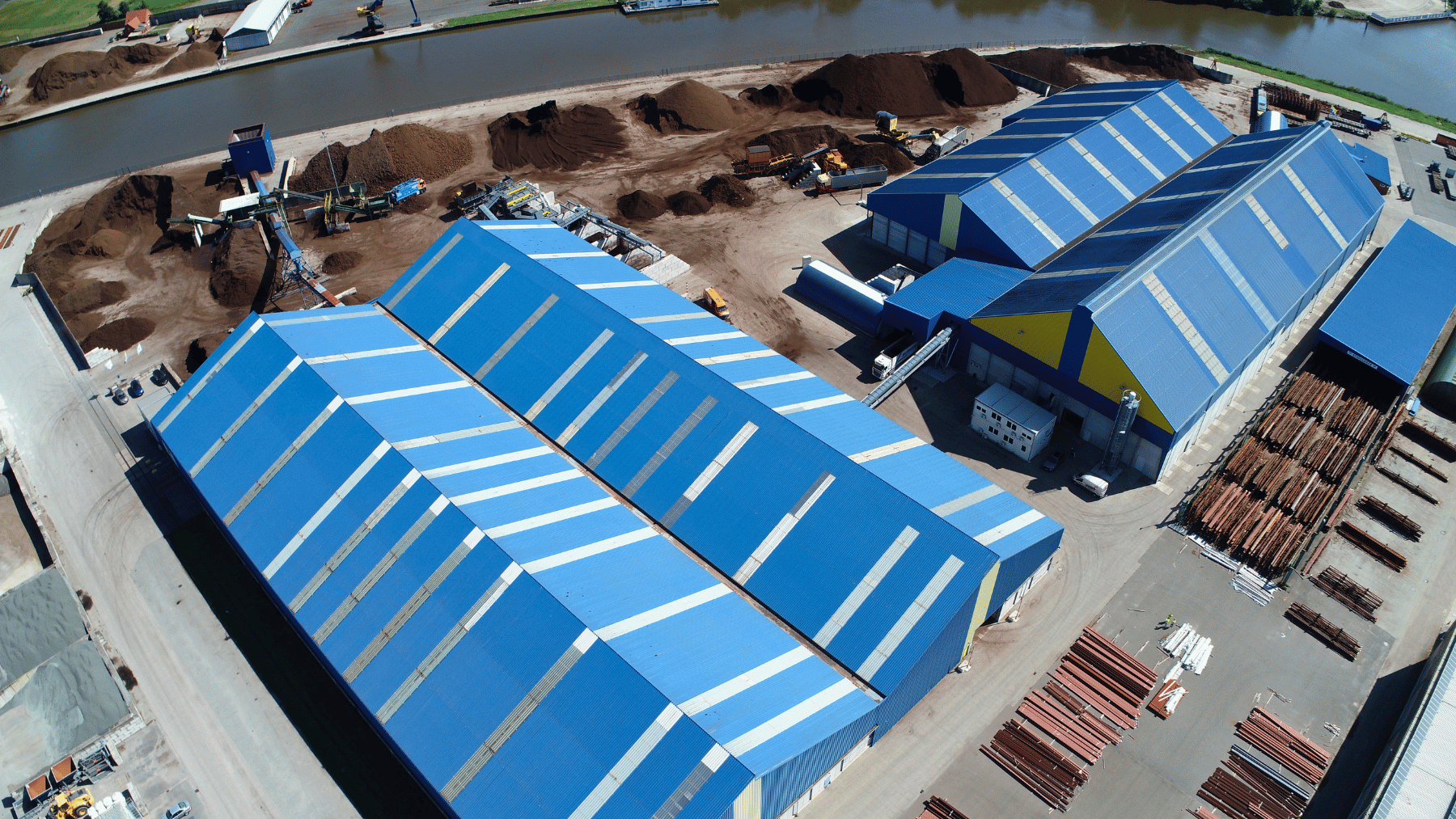
Klasmann-Deilmann has a new site in Germany. The company officially opened its new factory in Papenburg in the presence of invited guests. From now on, customers in the DACH region will be supplied with unpackaged growing media from this location.
In his speech, Managing Director Jan Astrup expressed his gratitude for the sustained and dedicated efforts of the partner companies and the teams responsible at Klasmann-Deilmann. “For a company of our size, a new factory is a major project offering many opportunities, but also risks,” said Jan Astrup. “We would like to thank our shareholders for their confidence that we will also make this site a success.”

Reflecting on developments in horticulture in Germany and neighbouring countries, Jan Astrup explained: “Germany needs this factory with state-of-the-art equipment, streamlined processes and a reliable output. The German horticultural sector requires high-performance growing media made from a variety of raw materials. Klasmann-Deilmann is the only growing media manufacturer investing in the German horticultural sector on this scale. We are demonstrating just how important this market is, even though the debate over peat use is casting a shadow over the entire horticultural production sector. We are showing just how important our customers in Germany, Austria and Switzerland are to us, as they will now be supplied even more reliably.”
The new factory currently produces around 5 m³ per minute. The aim is to increase this to 7–8 m³ per minute in the foreseeable future. Taking seasonal fluctuations into account, the site’s theoretical maximum capacity is approximately 350,000–400,000 tm³ per year. In the initial phase, production will be around 270,000 m³ per year.
The port location is ideal for a modern and diverse supply of raw materials. Cocos from India and Sri Lanka, peat from the Baltic states, as well as wood fibres, bark and green compost from Germany are available. The factory specialises in loose substrates.
Jan Astrup concluded: “This has realised what we had hoped for: a port location with international raw material links and a state-of-the-art factory whose horticultural influence extends as far as southern Germany, Austria and Switzerland.”